Skip to content
CIAW · RESEARCH AREA

Game Studies & Ancient Worlds

Games do not simply depict Antiquity. They make interpretations of the ancient world playable—through rules, narratives, systems, maps and decisions.

At CIAW, Game Studies connects historical research, classical reception and critical analysis of digital games. Our focus is not whether a game is merely “accurate”, but how it constructs the past, what players are allowed to do within it and which historical perspectives become visible or remain absent.

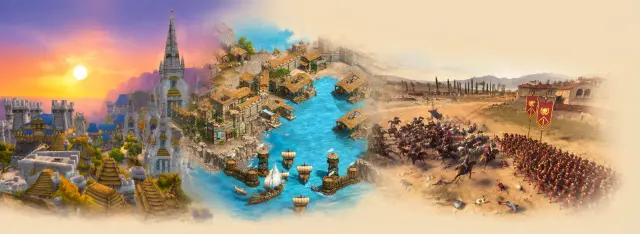
Playing Antiquity panoramic composition evoking historical and fantasy strategy and role-playing video games
Visual identity for the Playing Antiquity thematic series · About the series ↗
QUESTIONS BEFORE ANSWERS

What does a game make possible?

Three connected directions frame our evolving research agenda. They are analytical priorities, not claims that any individual project or manuscript has already been published.

01

Historical authority & political power

How do games distribute legitimacy, leadership, coercion and political agency? Who defines a conflict, decides what counts as victory or gives actions their historical meaning?

Authority · institutions · civil conflict · historical agency
02

Social worlds & playable systems

Which aspects of ancient social life are encoded in populations, economic rules and advancement systems? How do simulations represent—and sometimes omit—labour, dependence and inequality?

Work · dependency · social hierarchies · simulation
03

Classical reception & cultural memory

What kinds of Antiquity do game worlds remember or reinvent? How do quests, material objects, visual conventions and narrative choices shape historical understanding?

Reception · material culture · narrative · public history
ANALYSIS, NOT ACCURACY SCORES

How we approach games

A game is more than its setting or story. To understand its interpretation of the past, we examine the relationship between what the game says, what its systems require and what the player can actually do.

Ancient evidence and historiography remain central: game analysis does not replace historical research, but raises questions about how that research is translated, constrained or transformed in digital media.

01

Read the playable systemObjectives, rewards, rules, resources, constraints and player agency.

02

Interpret the representationVisual and material culture, language, narrative framing and political assumptions.

03

Return to historical evidenceCompare game interpretations with ancient sources, archaeological material and modern scholarship.

04

Make the analysis accountableIdentify the game version, context, observed sequences and limits of interpretation.

BEYOND THE SCREEN

Why this matters for Ancient Studies

For historical scholarship

Games circulate ideas about causation, institutions, violence, power and social life. Studying their systems helps expose the interpretations through which those ideas become plausible.

For teaching & public history

Critical game literacy helps distinguish evidence from invention and encourages discussion of how digital media organise historical knowledge—without treating every game as a classroom tool.

SCHOLARLY PUBLICATION & EXCHANGE

Playing Antiquity

Video Games, Teaching and Historical Knowledge. Playing Antiquity is the annual thematic series of AI & Antiquity dedicated to rigorous, peer-reviewed work on video games and ancient worlds.

Its scope includes classical reception, simulation, mechanics, historical agency, cultural memory, teaching, and related questions. Contributions do not have to concern artificial intelligence or educational applications.

Read the Call for Papers ↗

Interested in this research area?

We welcome scholarly dialogue on video games, Antiquity, reception and methods. Editorial submissions should go through AI & Antiquity.

Contact CIAW →